


Why non woven garment bags are more suitable and compostable for business cover with customizations?
2026-07-15 14:44
Why Non-Woven Garment Bags Are the Superior Compostable & Customizable Business Garment Cover Solution
1. Core Material Advantage: PP Spunbond Non-Woven Delivers Balanced Compostability & Commercial Durability for Business Use
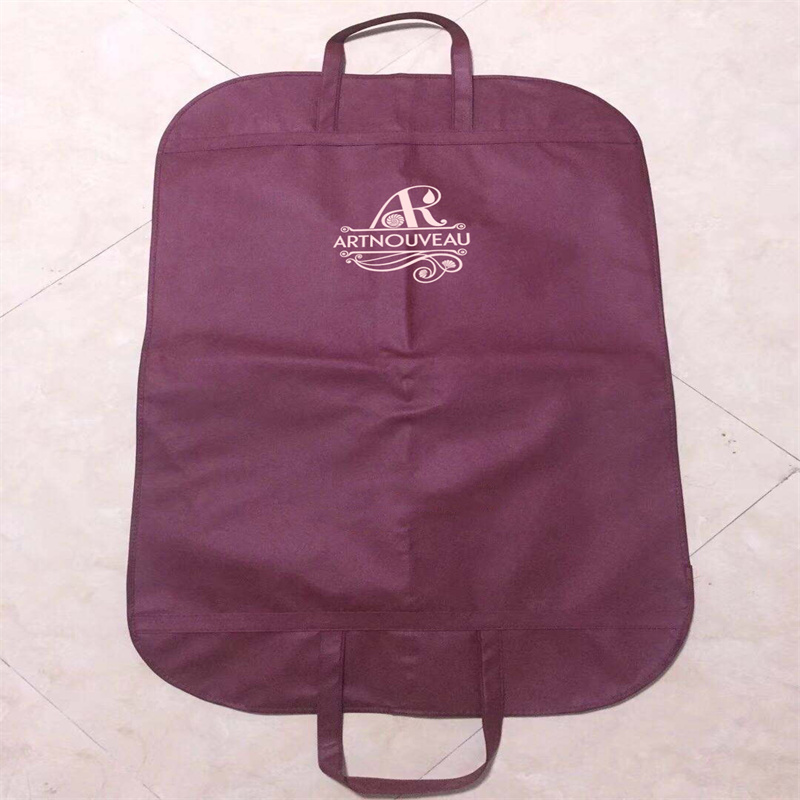
Traditional garment protective covers fall into two flawed categories: single-use plastic PE/PVC dust bags and costly cotton canvas garment sleeves. Polypropylene spunbond non-woven fabric stands apart because it strikes a unique balance between eco-compostable credentials, industrial usability, and commercial cost efficiency that no alternative material can match for brand-facing business applications.
First, standard disposable plastic garment covers are made of virgin polyethylene film, which is non-biodegradable and accumulates microplastic waste in landfills, retail spaces, dry cleaning facilities, and hotel wardrobes. Many global markets now enforce plastic ban regulations for single-use retail packaging—EU single-use plastic directives, US state-level plastic bag bans, UK extended producer responsibility (EPR) textile packaging rules, and China’s plastic restriction policies all penalize businesses relying on plastic garment bags. By contrast, high-grade biodegradable additive-infused PP non-woven fabric used for premium business garment covers is certified industrial compostable. Under controlled industrial compost conditions (55–70°C microbial environments), the fabric fully breaks down into inert carbon dioxide, water, and organic biomass within 180 days, leaving no toxic microplastic residues. Even standard non-laminated PP non-woven without biodegradable additives is far more eco-friendly than plastic: it is lightweight, requires 60% less fossil fuel raw material to manufacture than thick PE plastic covers, and is fully recyclable via polypropylene waste streams, aligning with corporate ESG, sustainability reporting, and green brand positioning priorities that modern businesses (boutique fashion brands, dry cleaning chains, hotel groups, wedding gown salons, corporate uniform suppliers) must prioritize for customer trust and regulatory compliance.
Cotton and linen garment sleeves, while naturally compostable, carry critical drawbacks for commercial scalability: natural woven textiles require water-intensive cotton farming, chemical bleaching/dyeing processes, heavy logistics weight that inflates shipping costs, and rigid minimum order quantities (MOQs) for custom printing. Non-woven polypropylene avoids these pain points: production consumes minimal water (no yarn spinning or weaving stages), raw material costs are stable and low, finished bags are ultra-lightweight to cut bulk freight expenses for bulk business orders, and base fabric production generates far lower carbon footprints per unit than woven natural textiles. For mass business applications—such as a national dry cleaning chain ordering 50,000 branded garment bags or a fast fashion retailer packaging seasonal suit stock—non-woven’s compostable low-impact material base eliminates the financial and sustainability tradeoffs of plastic or cotton alternatives.
2. Superior Functional Performance Tailored to Commercial Business Garment Protection Needs
Businesses rely on garment covers to protect inventory during retail display, cross-country logistics, long-term warehouse storage, customer takeaway, and hotel uniform management—functional demands non-woven fabric fulfills better than plastic, paper, or canvas competitors, while retaining compostable properties.
2.1 Breathability Prevents Inventory Damage (A Critical Commercial Benefit)
Thick plastic garment covers create fully sealed, airtight environments that trap moisture, sweat residue, and chemical dry cleaning solvents inside. Over weeks or months of storage, trapped humidity triggers mildew, mold, yellow fabric discoloration, and odor buildup on high-value merchandise like wool suits, silk dresses, leather outerwear, wedding gowns, and hotel linen uniforms. This creates costly inventory loss for fashion retailers and dry cleaners—damaged goods must be discounted or discarded entirely. Non-woven fabric’s porous fiber structure enables consistent air circulation through the bag body, naturally regulating internal humidity without sacrificing dust-proof performance. Compostable non-woven garment bags block airborne lint, dirt, and UV light (in pigment-dyed thick GSM variants) while allowing residual garment moisture to evaporate, drastically reducing commercial inventory spoilage and after-sales customer complaints about discolored clothing. Paper garment sleeves, another compostable alternative, lack this breathable strength: paper easily tears when hanging heavy coats, dissolves if exposed to humidity in warehouse storage, and cannot withstand repeated customer handling in retail environments.
2.2 Adjustable Structural Durability Matches Variable Business Use Cycles
Commercial clients have divergent use-case lifespans for garment covers: dry cleaners may need short-term reusable sleeves for customer pickup, luxury boutiques require heavy-duty long-term storage bags for high-ticket formalwear, and corporate uniform providers need lightweight travel sleeves for staff uniforms shipped to regional branches. Non-woven fabric’s customizable GSM range (60 GSM disposable economy grade up to 100 GSM heavy reinforced grade) lets manufacturers tailor tensile strength, tear resistance, and structural lifespan without abandoning compostable material properties.
60–70 GSM compostable non-woven: Ideal for low-cost single-to-few-use dry cleaning business orders; fully compostable after customer disposal.
80–100 GSM reinforced compostable non-woven: Double-stitched seams, reinforced hanger eyelets, optional side gussets and carry handles for repeated retail, travel, and wardrobe storage use. Even after dozens of reuses, the fabric retains its compostable breakdown capability once the business or customer discards it at industrial compost facilities.
Plastic covers either tear easily as thin disposable film or become non-compostable thick laminated plastic; cotton canvas lasts indefinitely but cannot be economically produced for mass commercial custom orders. Non-woven’s flexible durability spectrum delivers targeted value for every business segment while preserving circular eco credentials.
2.3 Lightweight, Space-Efficient Logistics for Bulk Business Procurement
B2B businesses order garment covers in tens of thousands of units at once, making shipping volume and weight a major overhead expense. Compostable non-woven garment bags fold flat into compact, thin stacks with zero rigid bulk; 10,000 standard-size non-woven suit bags occupy less than 40% of the shipping container space required for equivalent cotton canvas sleeves or rigid plastic garment bags. Lower shipment volume reduces carbon emissions from transport and slashes sea/air freight costs for wholesale business buyers—an operational advantage plastic and woven alternatives cannot match. Warehousing is also simplified: folded non-woven bags stack neatly without moisture damage, unlike paper sleeves that warp in damp storage or canvas that absorbs ambient humidity and gains weight over time.
3. Unmatched Versatility for End-to-End Business Customization (Print, Structure, Size, Features)
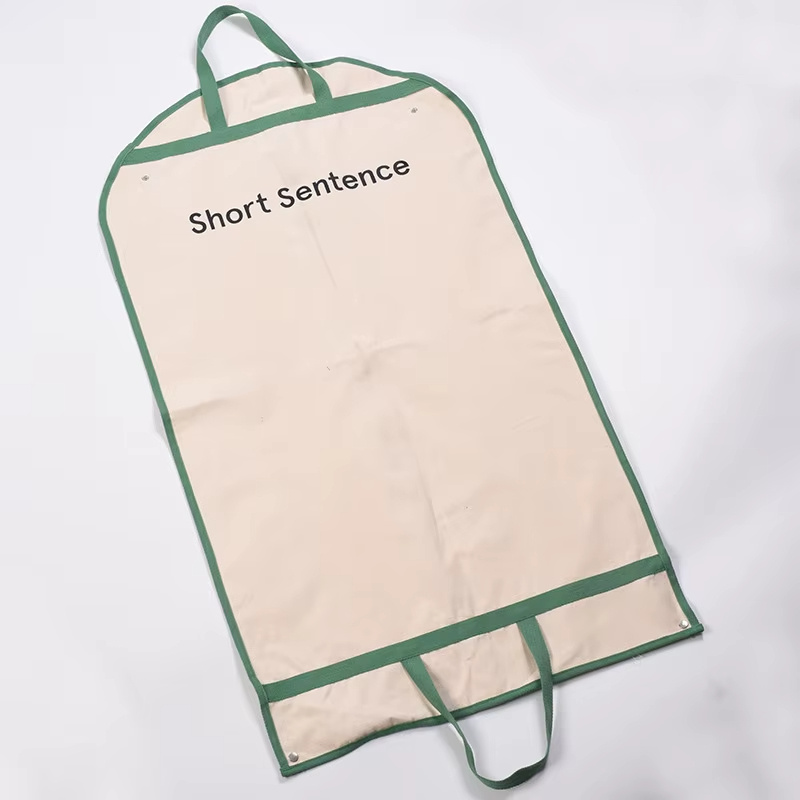
Custom branding and tailored structural design are non-negotiable for commercial garment cover buyers, who use garment bags as low-cost off-shelf marketing collateral to boost brand recognition, embed operational workflow features, and align packaging with brand aesthetic guidelines. Non-woven fabric supports full-spectrum customization at scalable business MOQs, with far fewer technical limitations and lower unit custom costs than compostable paper, cotton, or biodegradable plastic alternatives.
3.1 Full Custom Size & Structural Modular Design
Every business category requires unique garment bag dimensions and functional add-ons, all achievable on compostable non-woven without compromising compostability:
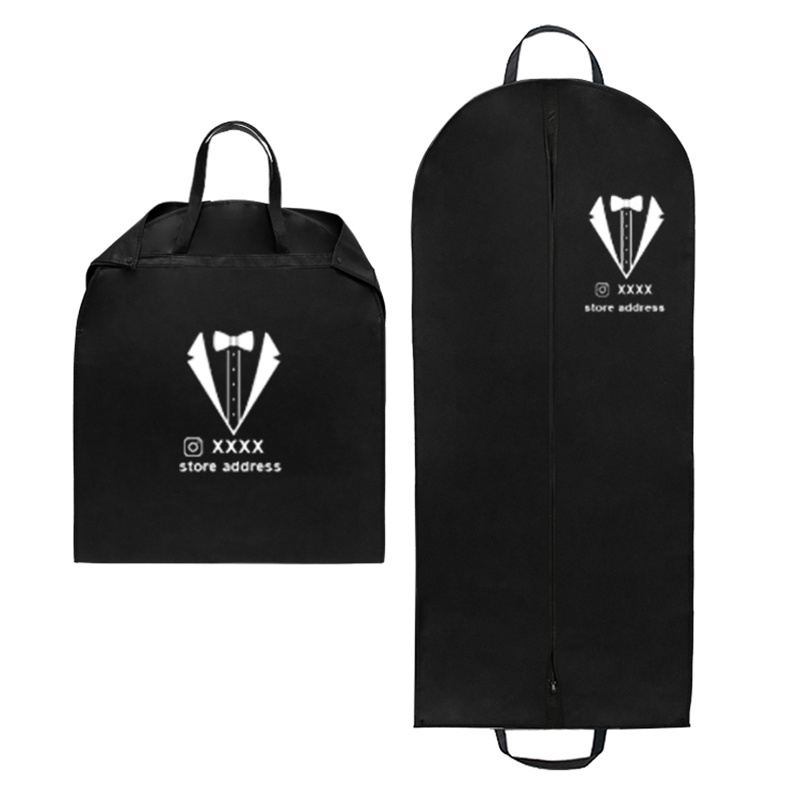
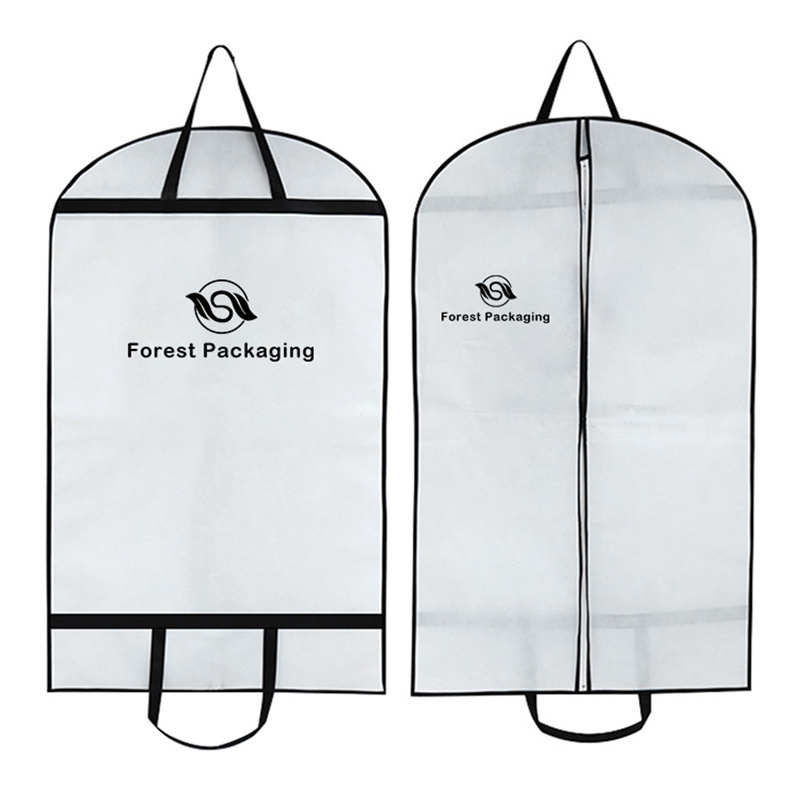
Custom sizing: Manufacturers produce bespoke lengths (90cm short blazer bags to 140cm wedding gown extra-long sleeves) and adjustable widths, plus customizable side gussets (5cm–10cm depth) for bulky down coats, leather jackets, and padded suits—paper sleeves cannot support expanded gusset structures without tearing, and plastic film gussets block breathability.
Modular functional add-ons (all compostable-compatible):
Transparent biodegradable PLA film viewing windows for retail inventory sorting (no toxic PVC plastic);
Reinforced fabric carry handles for boutique customer takeaway and travel uniform programs;
Velcro-sealed reinforced hanger openings, auto-lock nylon coil zippers in custom brand-matched colors;
Heat-sealed label panels for printing dry cleaning tracking codes, hotel uniform inventory numbers, or brand care instructions.
All structural attachments use matching compostable non-woven fabric and water-based adhesive, ensuring the entire finished bag remains fully compostable as a single unit—unlike plastic garment bags with non-compostable metal zipper hardware or cotton sleeves with plastic buckles that contaminate compost waste streams.
3.2 Flexible Brand Printing Customization with Eco-Safe Compostable Inks
Branding customization is where non-woven outperforms all other compostable garment cover materials, supporting multiple print techniques suitable for small boutique orders up to mass national chain bulk orders, using water-based compostable inks that do not disrupt the fabric’s biodegradation cycle:
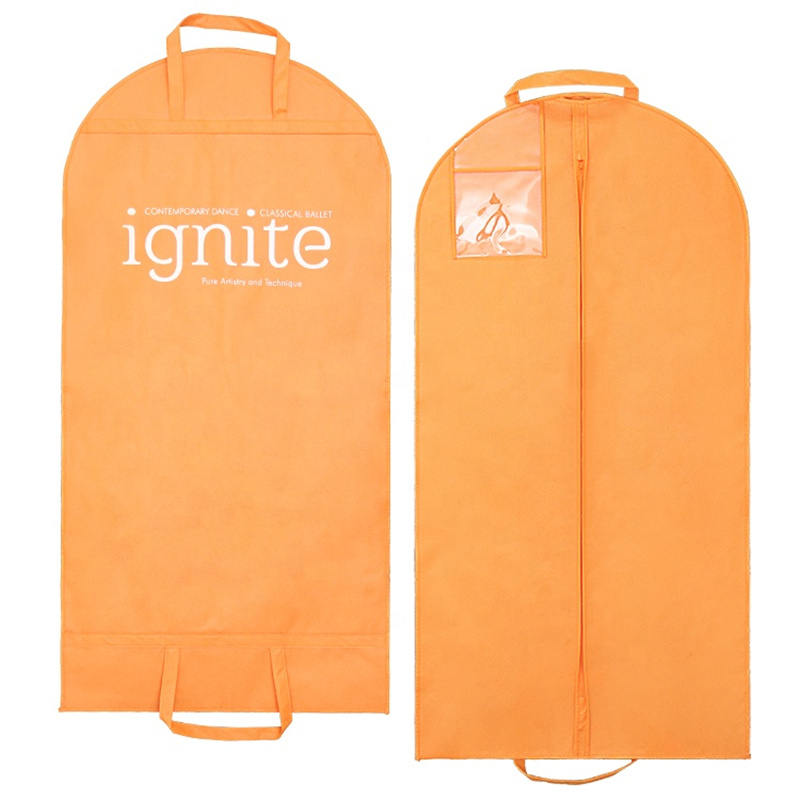
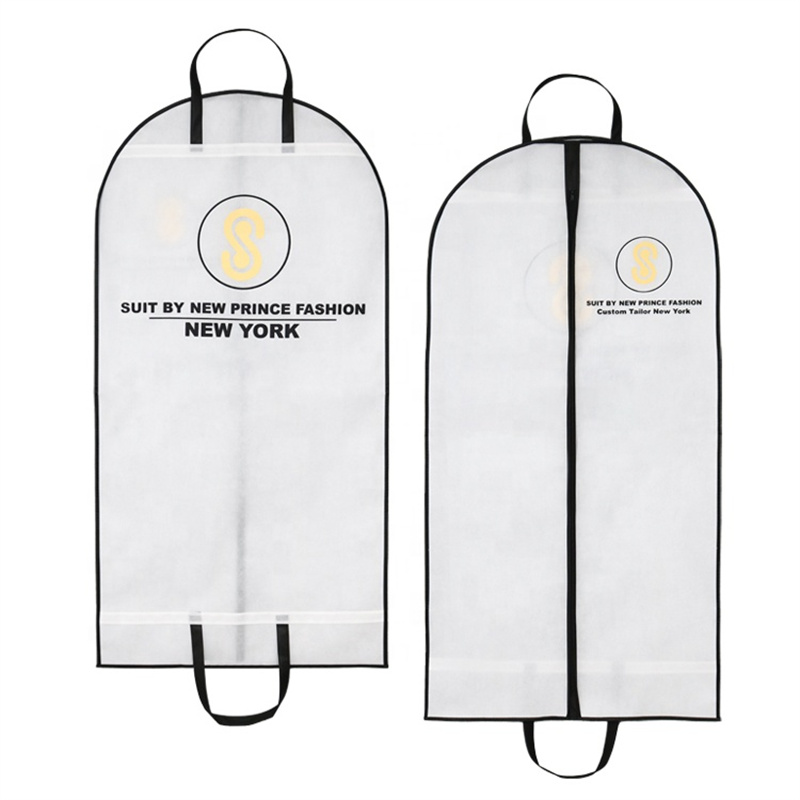
Silkscreen printing: Low minimum order volumes (starting at 500 units) ideal for small local businesses, independent fashion boutiques, wedding dress salons, and boutique hotels. High opacity, long-wearing brand logos, taglines, and contact information can be printed on front panels, top headers, or side margins in custom Pantone color matching.
Heat transfer digital printing: For high-detail full-color graphics, photographic brand artwork, gradient brand color schemes, and multi-language compliance text (critical for export-focused apparel businesses trading across EU, North American, and Southeast Asian markets). Unlike paper, non-woven’s stable fiber surface prevents ink bleeding, smudging, or fading during hanging and storage.
Embossing and debossing: Tactile brand logo indentations for luxury high-end fashion brands seeking premium unprinted branding options, creating upscale packaging differentiation without chemical inks.
By contrast, compostable paper sleeves suffer ink bleed on humid days and limited color vibrancy, while cotton canvas requires expensive pre-treatment before printing and carries high custom setup fees. Biodegradable plastic film printing produces faint, easily scratched branding that deteriorates after minimal customer handling, rendering the marketing value useless for businesses. Non-woven’s print retention ensures branded graphics stay crisp through months of retail display, storage, and customer transport—maximizing every business’s packaging marketing ROI.
3.3 Customizable Material Grades & Finishes Aligned with Brand Sustainability Stories
Brands targeting distinct sustainability messaging can fully customize non-woven fabric properties while retaining compostable certification:
Matte unlaminated compostable non-woven: Minimalist, zero plastic coating for eco-focused organic clothing brands emphasizing unprocessed circular packaging;
Light biodegradable PE laminated non-woven: Water-resistant finish for dry cleaners and outdoor apparel brands protecting rain-prone outerwear, with the lamination layer designed to break down alongside the base fabric in industrial compost;
Custom pigment dyed fabric base: Over 100 Pantone color options for brand-aligned base bag hues (black, cream, navy, sage green, brand signature accent colors), eliminating the need for full-surface printing to match brand visual identity. Dyes used are heavy-metal-free, formaldehyde-free, and compost-safe, complying with REACH, RoHS, and OEKO-TEX textile safety standards required for international business export.
4. Commercial Cost & Supply Chain Advantages for Scalable Custom Business Orders
For B2B buyers, combining compostable compliance with full customization must remain cost-effective at scale—a box non-woven garment bags check that competing compostable materials cannot.
Low minimum order quantities for custom jobs: Many non-woven manufacturers accept custom printed orders starting at 300–500 units, accessible to small independent businesses, family-run dry cleaners, and regional hotel groups. Compostable cotton or linen garment sleeves typically require MOQs of 5,000+ units for custom printing due to complex weaving setup costs, locking smaller businesses out of branded packaging.
Stable per-unit wholesale pricing: Polypropylene non-woven raw material supply chains are global and resilient, avoiding the volatile price swings of organic cotton and specialty compostable paper pulp. Even fully customized printed, gusseted, window-equipped compostable non-woven bags cost 40–65% less per unit than equivalent custom cotton garment sleeves, drastically cutting annual packaging overhead for businesses ordering hundreds of thousands of covers yearly.
Fast custom production lead times: Non-woven manufacturing skips yarn spinning and weaving steps; custom printed orders are produced in 7–15 working days, compared to 30–45 days for custom woven cotton sleeves or coated compostable paper products. Fast turnaround supports seasonal retail business cycles, pop-up store launches, and urgent dry cleaning chain rebranding projects, where businesses cannot afford long packaging lead times.
5. Competitive Brand Differentiation via Compostable Custom Non-Woven Packaging
Modern consumers and corporate B2B clients (hotels, corporate uniform procurement teams, wholesale clothing distributors) prioritize partners with verifiable sustainable packaging. Custom compostable non-woven garment bags act as tangible proof of a business’s environmental commitments, creating competitive market differentiation unavailable with plastic or non-compostable packaging:
Fashion retailers can market fully compostable branded garment covers as a premium customer perk, attracting eco-conscious shoppers willing to pay a small brand premium for sustainable packaging;
Dry cleaning chains use printed compostable non-woven sleeves to stand out against competitors still using single-use plastic bags, marketing their zero-plastic operational policy on storefronts and social media;
Luxury wedding gown salons offer custom logo compostable long garment bags as a value-added wedding package benefit, delivering reusable, eco-friendly keepsake packaging for brides instead of disposable plastic dust covers;
Hotel and corporate uniform suppliers embed company branding on compostable non-woven storage sleeves to reinforce corporate ESG compliance during client tender bids, a decisive advantage when competing for large corporate hospitality contracts.
Unlike one-size-fits-all generic compostable packaging, full customizability lets businesses align every visual and functional element of the garment cover with brand identity, turning a purely protective product into recurring brand exposure during customer home storage, travel, and wardrobe use. When the bag reaches its end of life, its fully compostable construction reinforces the brand’s sustainability narrative without generating lasting plastic waste—closing the circular packaging loop for commercial enterprises.
6. Regulatory & Waste Stream Compatibility for Global Business Operations
International trade and local waste regulations create major risks for businesses using uncertified packaging materials. Certified compostable non-woven garment bags comply with global biodegradation standards (EN 13432 EU industrial compost certification, ASTM D6400 US compostability standard), meaning they can be legally disposed of in commercial compost facilities across Europe, North America, Australia, and Southeast Asia without contaminating recycling streams. Plastic garment bags are classified as residual waste in most regions and incur plastic tax levies in the UK, France, and EU member states. Cotton canvas, while biodegradable, is categorized as textile waste and cannot be processed in standard industrial compost facilities, requiring separate textile recycling streams that many small businesses lack access to. Custom compostable non-woven garment bags eliminate cross-border regulatory risk for export-focused apparel businesses, as their certified compostable material meets unified international packaging eco-standards regardless of target sales market. Additionally, all custom printed inks and structural accessories on non-woven bags are free of restricted hazardous substances (formaldehyde, lead, phthalates), complying with textile safety standards for direct contact with clothing and human skin—critical for businesses handling wearable retail merchandise.
Final Summary
Compostable non-woven garment bags emerge as the optimal business garment cover solution because they uniquely combine fully certified industrial compostability, unrivaled structural and graphic customization flexibility, commercial-grade protective functionality for inventory, scalable cost efficiency for bulk B2B orders, streamlined global supply chain logistics, and powerful brand sustainability marketing value. No alternative compostable packaging material—paper, cotton canvas, biodegradable plastic film—can simultaneously deliver dust/moisture protection, low-cost mass custom branding, lightweight logistics, regulatory compliance, and true circular compostable waste disposal that modern retail, hospitality, dry cleaning, and uniform businesses demand. For any commercial enterprise seeking branded reusable garment protection aligned with eco-friendly corporate goals, custom compostable non-woven garment bags represent the most practical, profitable, and sustainable long-term packaging investment.
Get the latest price? We'll respond as soon as possible(within 12 hours)